Cleaning
Cleaning and removing rust from garden tools
Updated 2026-05-15
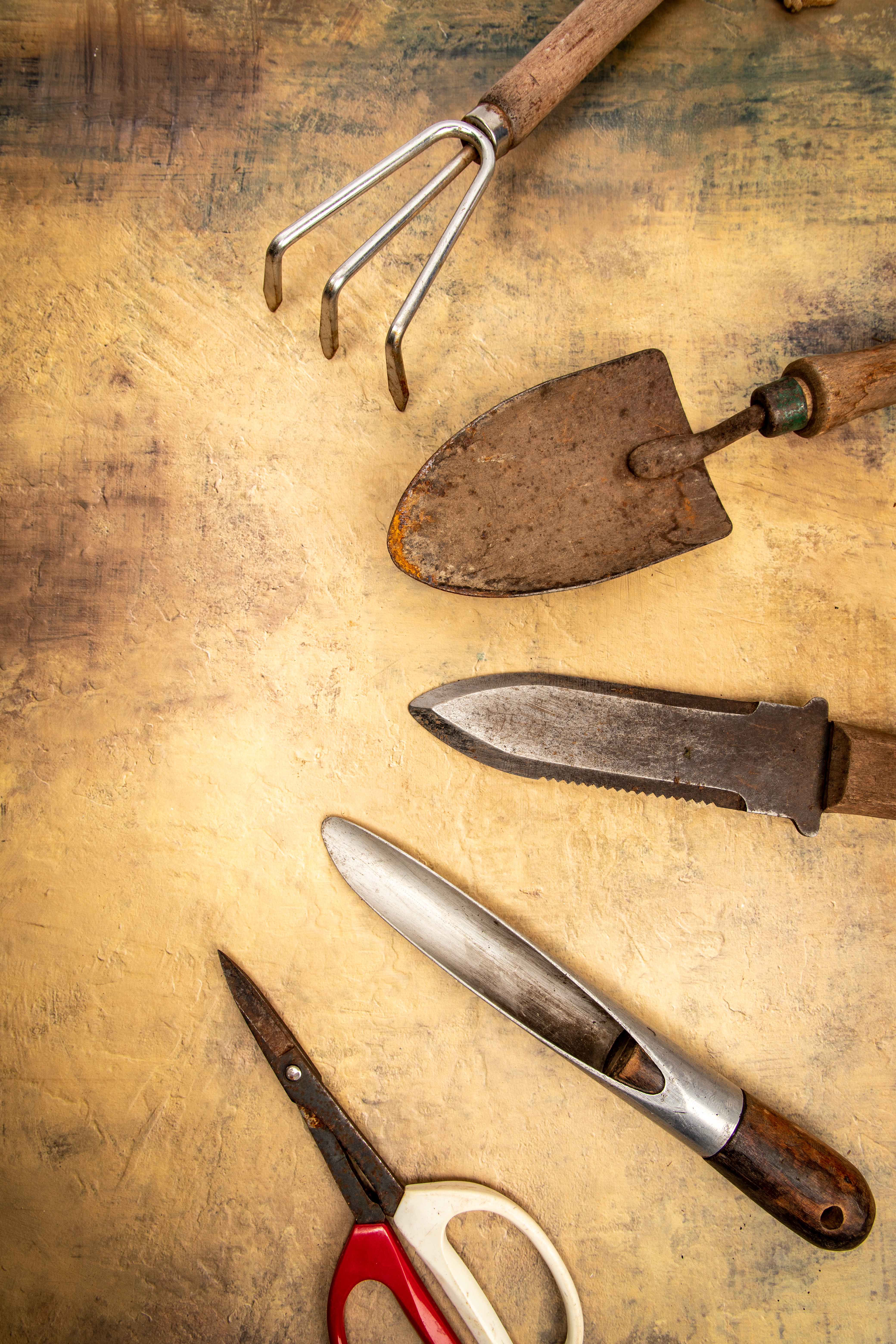
Most rust on garden tools is shallow surface oxidation, not structural damage. Caught early it wipes away in minutes; left through a humid summer it pits the metal and dulls every edge. The routine below works through the stages from light soil to set-in rust.
Clear soil and sap first
Dried soil holds moisture against the blade, and plant sap acts like a weak acid on bare steel. Knock off loose dirt with a stiff brush, then scrape compacted soil from the shoulders of a spade or the joint of secateurs where it collects. Pine and conifer sap, common across Canadian yards, is sticky enough to need a solvent.
- Use a wire brush or a wooden scraper for caked soil on digging tools.
- Wipe sap from blades with a cloth dampened in mineral spirits or rubbing alcohol.
- Open the pivot on pruners and secateurs so debris does not stay trapped.
Wash, then dry completely
A quick wash in warm soapy water removes the remaining film. The step that actually prevents rust is the drying that follows. Water left in a joint or under a wooden handle ferrule is enough to restart oxidation overnight.
The single habit that matters most
Dry every tool before it goes away, not just at the end of the season. A cloth wipe after each use removes far more future rust than any deep clean in spring.
Removing existing rust
Light surface rust
Rub with a fine abrasive pad or crumpled aluminium foil dipped in a little water. The foil is softer than steel and lifts oxidation without scratching the blade.
Moderate rust
Work the area with medium then fine sandpaper, following the length of the blade. Finish along the existing grain so the surface stays smooth.
Set-in rust
Soak the metal head in white vinegar for several hours, then scrub. Rinse and dry thoroughly afterwards, because the acid that loosens rust will also encourage new rust if left on the steel.
Protect the bare metal
Cleaned steel is unprotected steel. Wipe a thin film of a light machine oil or a food-safe oil such as boiled linseed over the blade and any exposed metal. Wooden handles benefit from the same linseed treatment, which seals the grain against the moisture swings of a Canadian shed.
For broader guidance on horticultural tool maintenance, the Royal Horticultural Society publishes a public reference on cleaning practices. Once the steel is clean, keeping an edge is the next routine — see sharpening cutting edges, and plan ahead with winter storage.